Thoughts on AI Tools today
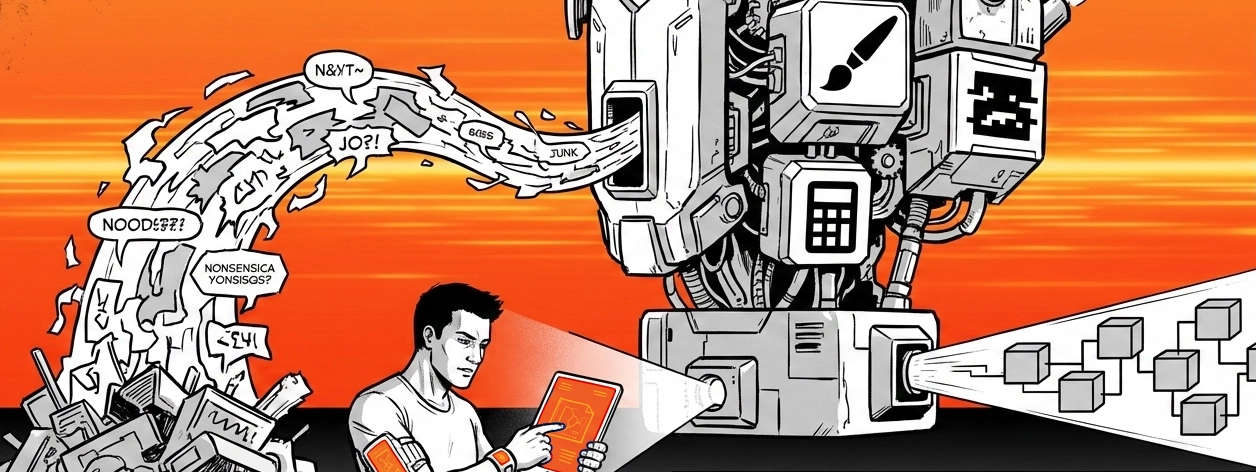
Recently, I've been lucky enough to have the resources and encouragement to try some new AI tools.
I'm a professional cynic. (But my heart's not in it!)
Anyone who knows me, knows I'm excited by the possibilities of positive change from tech. I'm also a realist. (A cynical optimist?!)
Over the years, the people I've worked and with the communities I've been part of have shaped me. I care about 'craft' in all it's forms. I care about building the right thing and building it right. I care about code quality, testability and readability. I care about usability, I care about appropriate solutions to solve real problems.
So how does this align with the tools I've been testing?
Code
Claude Code is ahead for me on quality. I've found you can (usually) constrain the tool to follow your process. This will no-doubt continue to improve.
It will surprise no-one, that I'm as prone to the temptation to let them run away with themselves as anyone else! It feels so 'productive', like magic, It often isn't!
(I've also tried and continue to play with Gemini-cli and Mistral-vibe both of which do a good job, but I prefer Claude.)
Design
Design wise, Antigravity did a good job for prototyping and in fact code, (once I got it to play nice.). AI prototyping still feels like attractive elements rather than well conceived interfaces.
It depend what you need from your prototype I suppose.
I often find them akin to Photoshop mock-ups in back in the day. More of a sales tool than something you can get real feedback from as they tend towards superficial.
To be fair, it also depends who's 'driving' the tool and what the aim of the prototype is. My observation is that some of these "prototypes" are more of a no-code(ish) spike. These can be super-helpful.
The scenario that bothers me more is 'interface' prototypes which look too complete. I worry that it stifles feedback. I notice that the interfaces are often a composite of elements, that supeficially look correct. On closer inspection, whilst it "technically" achieves the needs, it's not a coherent whole. It's not easy or clear to use. (A jumble of non-obvious tabs being a common example.)
So, are they valuable?
Yes, they're valuable, and will no-doubt become more so.
In both cases though, the takeaway for me is that they are still tools. They can augment out abilities and enhance our capabilities.
What we need to do (imho) is stop treating them as sentient or godlike, and rather learn to use them better. To undertand thier edges, their leanings - each model has it's strengths and weaknesses.
With great power, comes great responsibility. The ability to put more crap in the world, faster, isn't in-itself valuable. You need a purpose, some sense of what success looks like and a set of standards. Otherwise, you're likely to create a disjointed mess, fast.


