CX Partners / NHSx Case Study
An NHS mental health service with a long waiting list, and not enough staff to meet demand — some days, not enough to properly triage the incoming requests. The people running it weren't technical, the eligibility rules were strict, and the wider NHS systems didn't talk to each other.
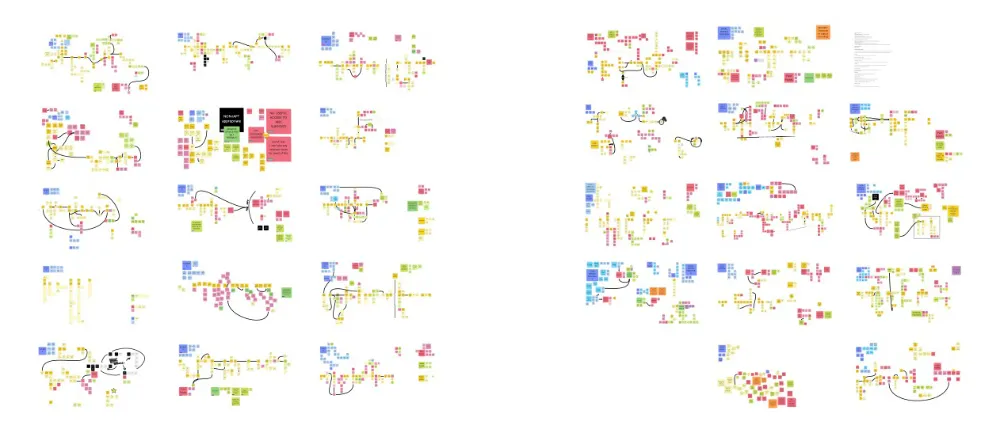
(Image deliberately blurred to protect client confidentiality)
Through CX Partners, I joined as contract Lead Service Designer, leading a small team — a project manager and a UX researcher — to help work out what would actually help.
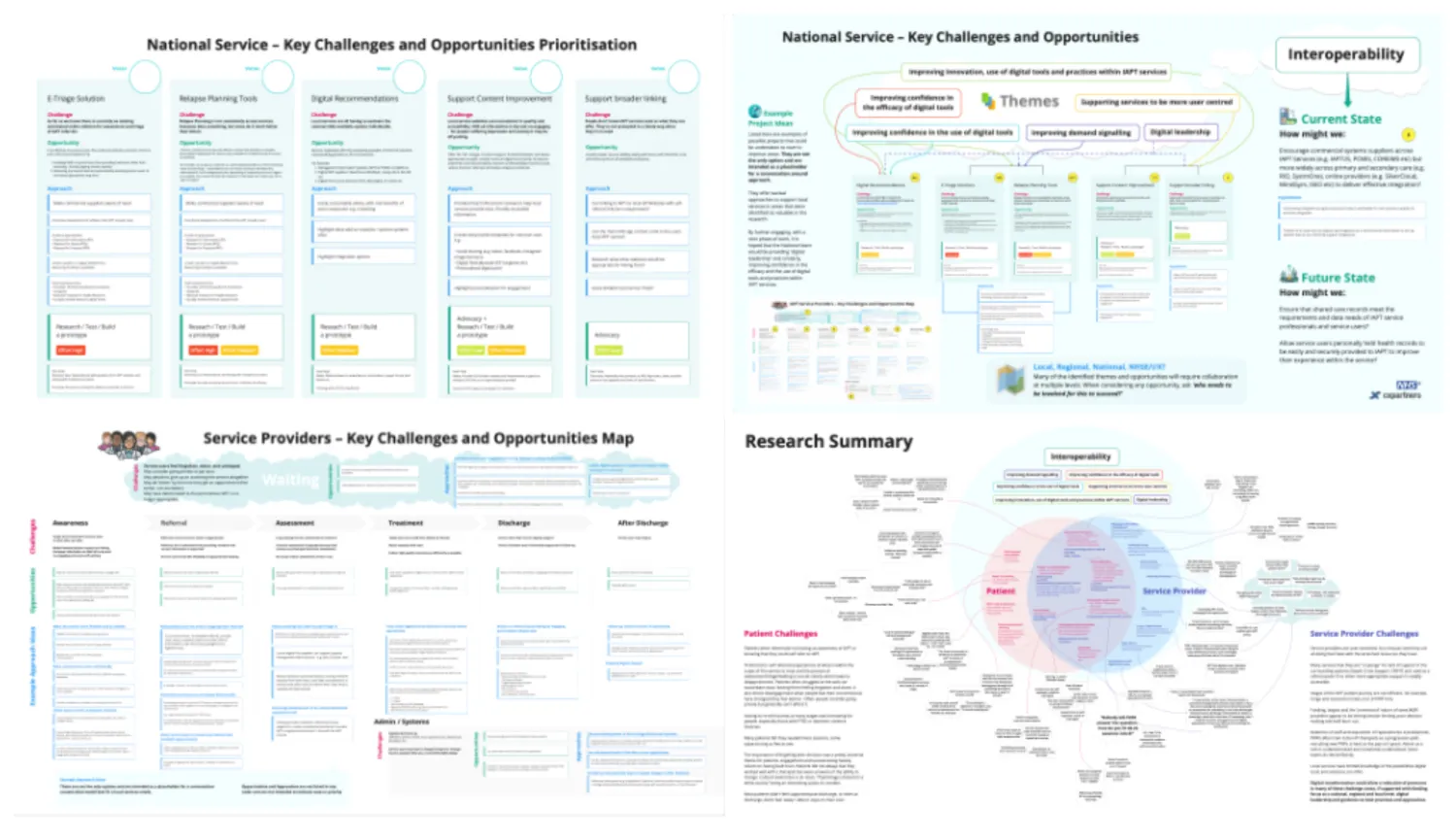
A prioritised set of options for improving the service, ranked by impact and feasibility.
The first case study for ongoing service design work within NHSx.
How do you improve a service under this much pressure?
Mapping what was really there
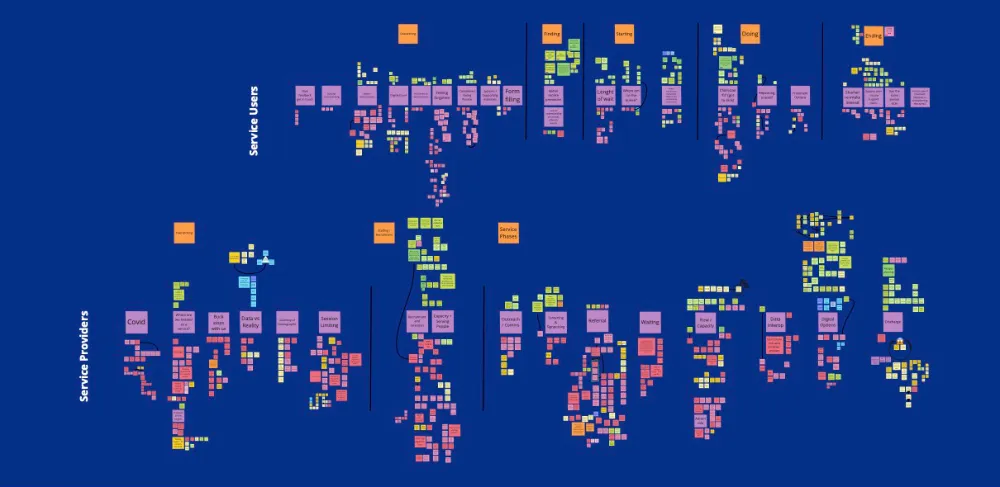
Workshops with the people running the service, mapping how it actually worked — touch-points, bottlenecks, the decisions staff make every day, and the constraints nobody could move.
Listening
Research interviews with staff and the people using the service — gathering what daily reality looked like on both sides, and where the system got in the way.
Deciding together
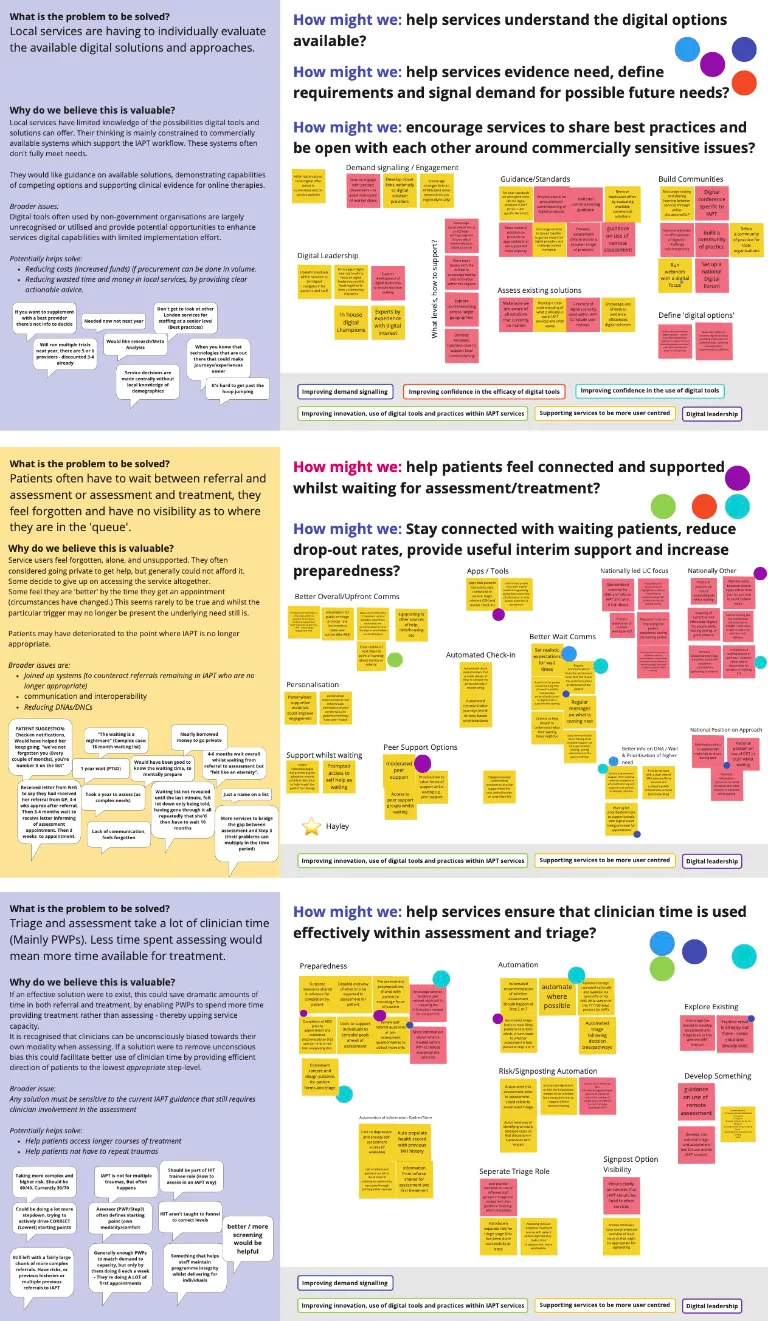
Findings presented to the service and NHSx, then a prioritisation workshop — options ranked by impact and feasibility, with implementation guidance a non-technical team could act on.
What changed
- A clear, end-to-end picture of the service — the first the team had had
- Practical interventions to address the long waiting list
- Improvement options ranked by impact and feasibility, owned by the people who'd deliver them
- A first case study for ongoing service design within NHSx